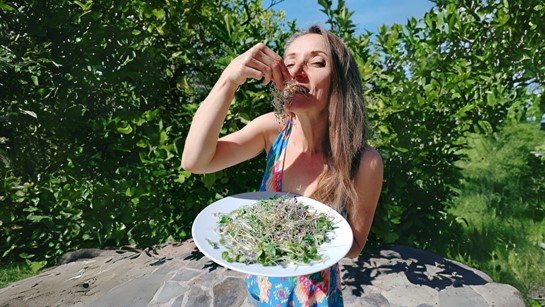

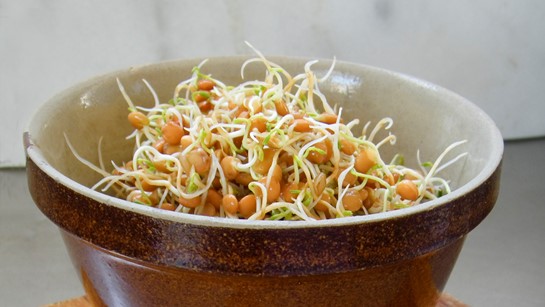
Sprouts are the most nutritious whole food on the planet. This is high frequency, high vibration living food that conveys its life-force energy to you! Learn the basics of sprouting beans and legumes.
What to Know Before you Grow
Varieties:
- Adzuki Beans
- Whole Red Lentils
- Whole Green Lentils
- French Lentils
- Fenugreek
- Mung Beans
- Garbanzo Beans
- Green Peas
Seed Storage:
Store all seed at room temperature in an air tight container.
Seed Quantities:
Start with ½ cup of each. Adjust quantities as necessary.
Containers for Soaking and Sprouting:
- Glass or Plastic Jars
- Easy Sprouter
- Plastic Pitchers
- Water Quality/Type
- Use filtered water
Choosing a location for your containers:
Light: No direct sun.
Humidity: Low to Moderate. 50% or less is ideal.
Temperature: Between 65 and 75 degrees is ideal.
Harvesting and Storage:
To insure that your harvest maintains its freshness use Debbie Meyer Green Bags. These bags are impregnated with a natural mineral called “oya” that will absorb the ethylene gasses that are released. If used as directed these will certainly extend the life of your harvest.
Approximate Yields:
Sprouted Beans and Legumes will increase in size and weight 2 to 3 times. This means ½ cup dry seeds will yield 1.5 cup of sprouts.
Using your Harvest:
All of these varieties make a great addition to any salad.
How to Sprout Beans & Legumes
Soak
- Put 1 cup of beans in soaking pitcher.
- Fill with 3 times the amount of water. Stir to eliminate air bubbles.
- Once the 8 to 12 hour mark has been reached, it is time to drain.
- Pour the contents of the soaking pitcher into the draining pitcher and rinse the seed with fresh water and allow water to drain.
Drain
- Insert the drain pitcher into the soak pitcher. This allows any excess water to drain from the seed and contains it in the pitcher.
- This will be performed two to three times per day.
- Re-sleeve pitchers, if not already.
- Fill or Flood the pitcher with water.
- Carefully stir seed. Allow seed to soak for a minute or two.
- Un-sleeve pitchers and allow to drain.
Rinse
- Rinse with fresh water and allow to drain.
- Insert the drain pitcher into the soak pitcher. This allows any excess water to drain from the seed and contains it in the pitcher.
Harvest
- The roots will have emerged from the beans and should be at least as long as the bean itself. If another shoot with a leaf begins to emerge, you have sprouted longer than necessary.
Storage
- Store sprouted beans and legumes in a green bag with the air removed. If moisture is present, placing a paper towel in the bag will extend shelf life.
- Place in the refrigerator.